Here is the revised Alaska article, fully updated to incorporate the YouTube webinar transcript you provided.
It clarifies intent, differentiates pathways accurately, and explains application expectations in plain language—while keeping the structure clean and CMS-ready.
Alaska Rural Health Transformation Program Funding Pathways
The Alaska Rural Health Transformation Program (RHTP) was intentionally designed to meet organizations where they are. As Alaska program leaders explained during the statewide RHTP webinar, communities, ideas, and organizations enter this process at very different stages of readiness—and the funding structure reflects that reality.
Rather than forcing every applicant through the same process, Alaska has built four distinct funding pathways, each designed to support a different type of need, capacity level, and project maturity. These pathways are not sequential requirements. They are multiple entry points into rural health transformation.
Understanding the Four Funding Pathways
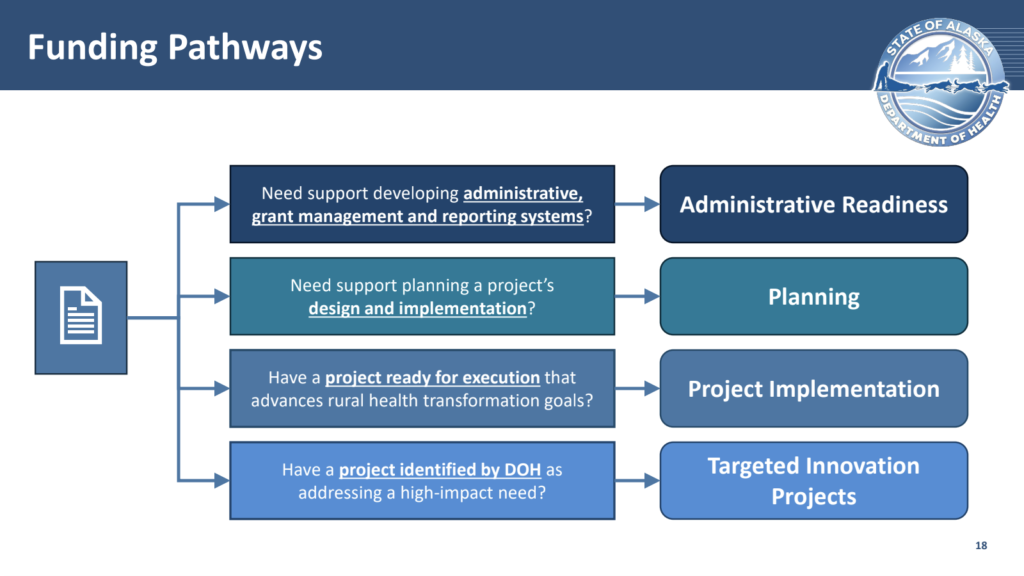
Figure 1. Alaska Rural Health Transformation Program funding pathways, designed to support organizations at different stages of readiness.
During the webinar, Alaska RHTP leaders emphasized a core principle:
Not every project should start at implementation. Some organizations need time to build capacity. Others need help shaping an idea. Some are ready to execute immediately.
The four funding pathways are designed to reflect that range:
- Administrative Readiness
- Planning
- Project Implementation
- Targeted Innovation Projects
Importantly, projects do not need to move through every pathway, and organizations are not required to start with readiness or planning before pursuing implementation.
Administrative Readiness
The Administrative Readiness pathway is intended for organizations that are not yet fully prepared to manage and deploy federal funds but want to build that capacity.
As described in the webinar, these grants are:
- A lighter lift to apply for
- Less detailed than full implementation applications
- Focused on preparing organizations to participate in federal programs
This pathway helps organizations:
- Assess and strengthen administrative capacity
- Build systems needed to accept and manage federal funding
- Prepare for future project or implementation opportunities
For organizations unsure whether they are ready to operate within a federal funding structure, administrative readiness provides a lower-risk entry point.
Planning
The Planning pathway is designed for organizations that have an idea but need support shaping it into a clear, executable project.
Program leaders described planning grants as ideal when:
- An organization has a concept but needs help scoping it
- Partners need to be aligned
- Project goals, activities, and timelines need refinement
Planning funds can support:
- Clarifying project scope and design
- Aligning partners and roles
- Developing workplans, budgets, and evaluation approaches
This pathway allows organizations to slow down before scaling up, reducing risk and improving long-term outcomes.
Project Implementation
The Project Implementation pathway supports projects that are ready to go.
As explained in the webinar, this pathway is applicant-driven. Organizations:
- Bring forward a clearly defined project
- Align their proposal with state-identified initiatives and allowable uses
- Demonstrate readiness to execute
In this pathway, applicants are essentially saying:
“This is what we want to do, and we are prepared to move forward.”
The state then reviews proposals to ensure they meet federal and state requirements and align with Alaska’s rural health transformation goals.
Targeted Innovation Projects
The Targeted Innovation Projects pathway differs in a critical way: it is state-directed.
Rather than applicants bringing forward their own ideas, the state identifies:
- A high-impact or priority need
- A concept or direction for addressing that need
- A desire to partner with external entities to carry it out
As described in the webinar, targeted innovation allows Alaska to:
- Invest strategically in priority areas
- Address gaps that require coordinated or statewide solutions
- Build projects where the state takes a more active leadership role
This is the key distinction between project implementation and targeted innovation:
implementation is applicant-led; innovation is state-led.
How Applications Will Work
Because RHTP funds are federal dollars administered through a cooperative agreement with the Centers for Medicare & Medicaid Services, Alaska is required to collect information on how funds are spent and what they achieve.
As explained during the webinar:
- All funding pathways will require an application
- The level of detail will vary by pathway
- Readiness and planning applications will require less information than implementation applications
Application materials are still under development, but Alaska shared a high-level view of what applicants can expect.
What Applicants Should Be Prepared to Submit
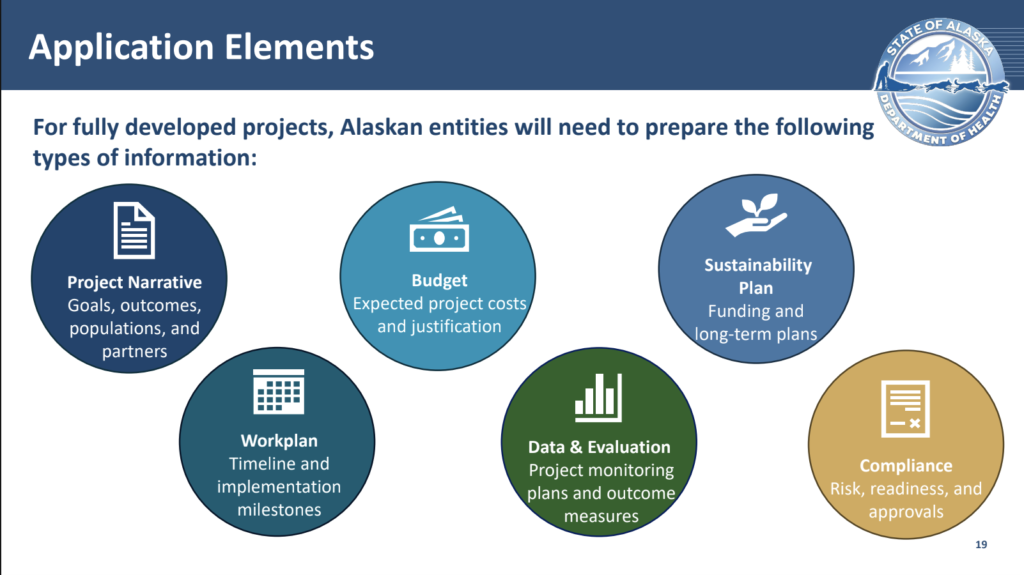
Figure 2. Core application elements for Alaska RHTP funding pathways. Level of detail will vary by pathway.
Across pathways, applicants should expect to provide information in several core areas:
- Project narrative: What are you proposing to do, who will it serve, and why it matters for Alaska’s health system
- Workplan: Activities, timelines, and milestones
- Budget: Expected costs and how funds will be used, potentially including year-by-year needs
- Data and evaluation: How progress and outcomes will be tracked
- Compliance and risk: Readiness to comply with federal requirements and manage project risks
- Sustainability: How the project will continue after time-limited funding ends
Alaska emphasized that sustainability is not an afterthought—projects should be designed with long-term viability in mind from the start.
Multiple Entry Points by Design
One of the most important clarifications from the webinar is that RHTP is not a single funnel.
Organizations may:
- Enter through readiness or planning
- Apply directly for implementation
- Partner with the state on targeted innovation projects
The goal is to create multiple avenues for participation, so entities and ideas that start in different places can still move rural health transformation forward.
Choosing the Right Pathway
The strongest applications will align honestly with organizational readiness and project maturity. Alaska’s funding pathways are intentionally flexible, but they are not interchangeable.
Choosing the right pathway helps ensure that:
- Projects are feasible
- Administrative burden is appropriate
- Funds are used responsibly
- Transformation efforts are sustainable
A Framework Built for Real-World Rural Health
Alaska’s Rural Health Transformation Program funding pathways reflect a clear understanding of rural reality: meaningful change does not happen all at once, and it does not look the same everywhere.
By offering readiness, planning, implementation, and targeted innovation pathways, Alaska has built a funding framework that supports capacity-building, execution, and strategic investment—without forcing a one-size-fits-all approach.

Founder of the Rural Healthcare Transformation Hub @ Nurse Recruitment X
Looking to secure Rural Health Transformation Program funds and fix your workforce shortages? Our Rural Health Transformation Hub helps rural hospitals, clinics, and home care agencies design winning proposals and build the pipelines needed to recruit and retain staff. We combine grant support with real recruitment expertise, giving you a low-risk way to compete for funds and implement workforce solutions that work.